

Wood-grain vinyl fencing appeals to homeowners who want durability without losing natural style. Many properties face stronger sun, heavier rain, and colder winters than before. These weather patterns place constant pressure on fence materials around homes. Wood-grain vinyl delivers engineered strength and a realistic texture. This balance gives homeowners confidence in the long-term performance and appearance of their homes.
Wood Grain Vinyl Defined for Residential Fencing
Wood-grain vinyl fencing is a PVC-based material molded to resemble the texture of natural wood. This fencing option targets homeowners who want durability without ongoing maintenance. The surface includes textured patterns and blended color layers. This structure helps the fence withstand harsh outdoor conditions year after year.
What Wood Grain Vinyl is Made Of
Wood-grain vinyl is a reinforced PVC with an embossed wood texture. This material includes UV inhibitors that reduce sun damage. The color runs through the panel instead of sitting on the surface. This construction limits peeling and fading. Manufacturers design panels to handle temperature shifts. These features support long-term residential use.
How it Differs From Standard Vinyl
Standard vinyl fencing often appears smooth and flat. Wood-grain vinyl adds depth through molded texture. This textured surface reduces glare under direct sunlight. The grain pattern also hides dust and water marks. Homeowners notice a more natural appearance. This difference improves curb appeal without added upkeep.
Why Homeowners Choose It Over Wood
Traditional wood fencing requires frequent sealing and repair. Wood-grain vinyl removes those ongoing tasks. The vinyl material resists insects, rot, and moisture. This durability helps maintain fence alignment. Homeowners spend less time on maintenance. This reliability suits busy households.
Why Wood-Grain Vinyl Holds Up in Severe Weather
Wood-grain vinyl fencing stands up to extreme conditions through engineered design rather than surface treatments. Homeowners dealing with heat, moisture, wind, and freezing temperatures need materials that respond predictably. This performance comes from how the vinyl is formulated, reinforced, and installed.
Handles Extreme Heat Without Structural Damage
High temperatures place constant pressure on outdoor fencing. Prolonged sun exposure often causes wood to warp or fade. Engineered vinyl responds differently under thermal stress. These performance traits protect fence structure and appearance.
Resists Warping and Heat Stress
Wood-grain vinyl contains heat stabilizers in its PVC blend. These stabilizers limit softening during peak summer temperatures. Panels maintain their shape even under direct sunlight. This material design prevents outward bowing. Homeowners see fewer gaps along fence lines. This stability supports long fence runs.
Maintains Color Under Intense Sun
UV inhibitors slow color breakdown caused by sunlight. This protection helps maintain a consistent tone across panels. Darker shades resist chalking over time. The textured surface diffuses light evenly. This quality preserves the wood-like appearance. Fences remain visually balanced throughout the summer seasons.
Manages Expansion in Hot Climates
All fencing materials expand with heat. This vinyl system accounts for that movement during the design process. Rails include spacing that allows controlled expansion. Professional installation supports this flexibility. Panels return to position as temperatures cool. This movement prevents long-term damage.

Performs Reliably in Cold and Freezing Weather
Cold climates introduce stress that cracks many fence materials. Freezing temperatures often reduce wood’s flexibility. Vinyl formulations respond with controlled resilience. These qualities help fences hold their shape through winter.
Absorbs Impact in Low Temperatures
Modern vinyl formulas remain flexible in cold weather. This flexibility reduces cracking from accidental impact. Snow removal equipment often damages wood fences. Vinyl absorbs shock more evenly. Panels retain their structure during the winter months. This resilience supports seasonal durability.
Supports Heavy Snow Loads
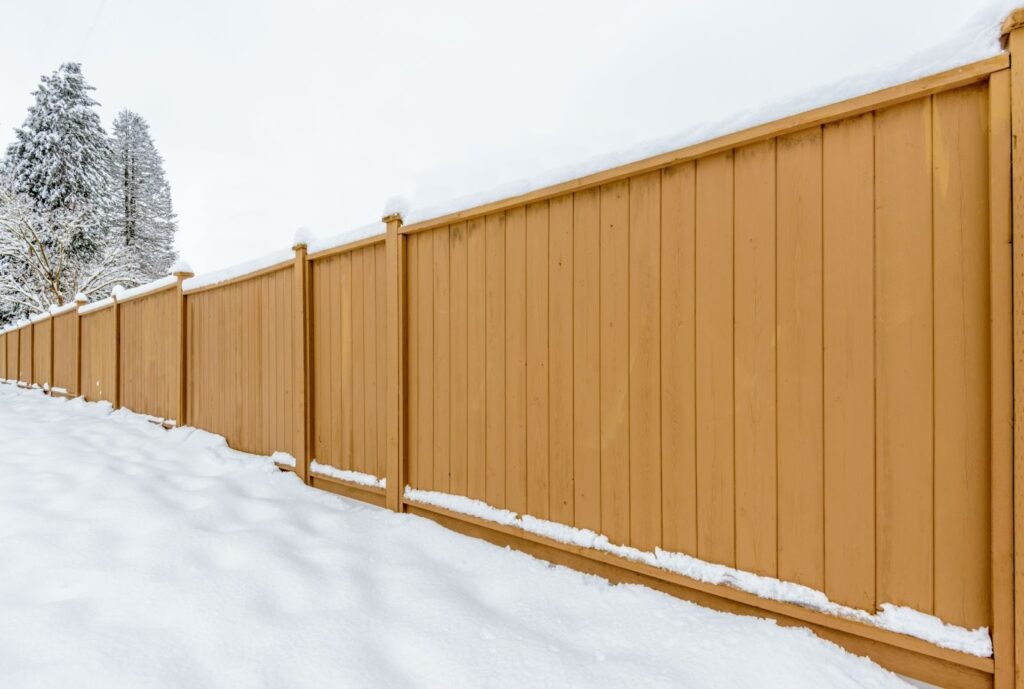
Heavy snow can rest against fences for extended periods. Vinyl systems distribute weight across reinforced rails. Posts anchored below frost depth resist shifting. This installation method limits leaning during thaw cycles. Panels maintain alignment through winter. Homeowners benefit from a consistent structure.
Withstands Freeze and Thaw Cycles
Repeated freezing stresses many organic materials. Wood absorbs moisture that expands as ice. Vinyl does not absorb water at any point. This non-porous surface prevents internal stress. Panels keep original dimensions. This stability reduces long-term wear.
Repels Moisture in Rainy and Humid Conditions
Rain and humidity shorten the lifespan of many fences. Moisture often leads to swelling and decay in wood. Vinyl avoids these issues through non-porous construction. These systems remain stable during wet seasons.
Blocks Moisture and Prevents Mold
Vinyl fencing features a non-porous surface. Rainwater runs off instead of soaking in. This quality prevents mold and mildew growth. The surface dries quickly after storms. Homeowners avoid staining and discoloration. Cleaning remains simple year-round.
Stays Stable in Saturated Soil
Heavy rainfall softens the soil around fence posts. Proper installation uses concrete footings. These footings anchor posts securely. Panels stay level despite ground movement. Wood fences often shift in similar conditions. Vinyl maintains alignment more effectively.
Remains Unaffected in High Humidity
Humid air causes wood fibers to expand and decay. Vinyl resists moisture in the air. The surface does not blister or peel. Color remains consistent through damp seasons. Coastal and southern regions benefit most. This durability supports long-term use.
Withstands High Winds and Severe Storms
Strong winds apply force across large fence surfaces. Poorly designed fences act like sails during storms. Reinforced vinyl systems better manage wind loads. These features protect property boundaries.
Reinforces Rails and Posts for Strength
Vinyl fencing includes internal reinforcement. Rails connect securely to posts at multiple points. Thicker posts resist bending under pressure. This structure evenly distributes wind force, as panels remain attached during gusts. This strength protects fence lines.
Controls Airflow Through Smart Layouts
Fence layout affects wind resistance. Semi-privacy styles allow limited airflow. This airflow reduces pressure on panels. Installers choose layouts based on exposure. Proper spacing improves durability. This planning reduces storm-related stress.
Recovers Quickly After Storm Events
After storms, vinyl fences show minimal damage. Panels rarely splinter or crack. The surface remains smooth after debris contact. Most fences return to their natural position. Repairs remain uncommon. This reliability reassures homeowners.
Extends Lifespan in Harsh Environments
Some regions combine heat, rain, wind, and cold. These mixed conditions strain many materials. Vinyl responds with predictable aging. Longevity becomes a practical advantage.
Resists Salt Air in Coastal Areas
Salt air corrodes metal and weakens wood. Vinyl does not react to salt particles. Surface finishes remain stable near the coast. Hardware choices support coastal installations. Fences keep color consistency longer. This benefit suits seaside properties.
Ages Predictably Over Time
All fencing materials change with age. Vinyl shows gradual and even wear. Color softens slightly without peeling. The structure remains intact for decades. Homeowners avoid sudden failures. This predictability aids long-term planning.
Outlasts Traditional Wood Fencing
Wood fencing often needs to be replaced within a few years. Moisture and insects shorten its lifespan. Vinyl resists these threats effectively. Many installations last for decades. This longevity improves overall value. Homeowners gain lasting performance.
Reduces Maintenance in Demanding Climates
Harsh weather usually increases upkeep demands. Vinyl reduces maintenance expectations. Homeowners benefit from simple care routines. These systems support busy lifestyles.
Simplifies Cleaning After Weather Events
Routine cleaning requires only water. Dirt and pollen rinse off easily. Storm debris rarely stains the surface. No sealing or painting is needed. The grain texture hides minor marks. Maintenance stays quick.
Limits Repairs Over Long-Term Use
Vinyl fencing rarely needs weather-related repairs. Panels do not rot or crack. Fasteners remain secure within posts. Damage usually comes from heavy impact. Replacement parts match existing panels. Repairs stay straightforward.
Controls Ownership Costs Over Time
Lower maintenance reduces yearly expenses. Homeowners avoid staining and repair costs. Labor time decreases significantly. Budget planning becomes easier. Savings accumulate over time. This advantage appeals to long-term owners.
Why Wood-Grain Vinyl Fits Tough Weather Areas
Wood-grain vinyl is suitable for properties exposed to harsh conditions. This fencing balances strength and appearance. Homeowners value consistency across seasons. These systems support residential needs effectively.
Seasonal Appearance Consistency
Seasonal changes affect many fence materials. Wood-grain vinyl keeps a steady look. Snow, rain, and sun leave minimal marks. The fence frames the yard evenly. Curb appeal remains stable. This consistency adds confidence.
Adaptability to Property Conditions
Each property presents unique challenges. Slopes and soil types vary widely. Vinyl systems adapt through flexible installation. Installers adjust spacing and footing depth. Panels follow terrain cleanly. This adaptability improves results.
Value for Long-Term Homeownership
Homeowners often plan for long-term residence. Wood-grain vinyl supports this outlook. Reduced maintenance lowers future projects. The fence performs reliably over time. This dependability builds trust. Long-term value becomes clear.
Trust Wood-Grain Vinyl for Weather-Ready Fencing
Wood-grain vinyl gives homeowners a reliable fencing option when weather conditions refuse to stay predictable. This material delivers steady performance without demanding constant attention or repairs. Properties benefit from a fence that keeps its structure and appearance through seasonal shifts. Choosing a weather-ready fencing solution today helps support long-term property value and everyday peace of mind.
Find clear, homeowner-focused answers about fencing choices and long-term performance on the Saddleback Fence and Vinyl Products blog.