

Outdoor living spaces shape how families relax and entertain at home. Many homeowners search for practical patio covering ideas that balance shade, comfort, and design. A well-planned patio roof can protect furniture, reduce heat, and extend the season of use. The right structure also strengthens curb appeal and supports property value. Smart shade solutions turn an exposed slab into a functional outdoor retreat that serves your household year after year.
Why Patio Covering Ideas Matter
Patio covering ideas provide structured shade and weather protection for residential properties. These outdoor roof systems reduce sun exposure, shield against rain, and create usable living space. Homeowners benefit from greater comfort and lower maintenance on outdoor furnishings. This investment decision often increases long-term property appeal and resale potential.
Climate and Weather Planning
Climate planning determines which patio cover performs best in your region. Homes in hot states like Texas or Arizona need UV-resistant materials that limit heat transfer. Insulated panels and reflective aluminum roofs reduce surface temperatures during peak summer months. Areas with heavy rain require sloped roofing and integrated gutter systems to direct water away from foundations. Snow-prone regions demand reinforced framing that safely handles weight loads. Local building codes often specify wind ratings, so homeowners should confirm compliance before installation.
Budget and Long-Term Value
Budget evaluation helps homeowners compare upfront costs with expected lifespan. Wood pergolas cost less initially but require periodic sealing and repairs. Aluminum or composite systems often cost more but reduce maintenance expenses over time. This cost comparison becomes clearer when homeowners calculate the costs of repainting, staining, and labor over several years. Financing options through local contractors can spread payments without delaying improvements. A balanced decision considers durability, warranty coverage, and projected return on investment.
Matching Your Home’s Architecture
Architectural consistency keeps a patio cover from looking like an afterthought. Modern homes pair well with sleek aluminum structures and neutral finishes. Traditional properties often suit timber beams or decorative columns that echo existing trim. Roof pitch and color should complement the main house to create visual harmony. This design alignment strengthens curb appeal and avoids mismatched materials. Homeowners who consult experienced patio contractors often achieve a more cohesive result.
Creative Patio Cover Designs for Homes
Outdoor spaces often go unused when the sun, rain, or wind becomes overwhelming. The right overhead structure changes that dynamic and gives your patio a consistent purpose. Homeowners who invest in thoughtful shade solutions gain more usable square footage without building an addition. The following are some practical options that suit different budgets, climates, and architectural styles.
Solid Roof Patio Cover Options
Solid roof patio covers deliver full overhead protection from the sun and rain. These permanent structures create an outdoor-room feel rather than just simple shade. Homeowners often choose them for dining areas, outdoor kitchens, or lounge spaces. This structure type supports lighting, ceiling fans, and mounted heaters for extended comfort.
Wood Patio Roof Structures
Wood patio roof structures offer warmth, character, and custom detailing. Cedar and redwood resist insects and moisture better than untreated lumber. Contractors can tailor beam sizes and decorative brackets to match Craftsman or farmhouse styles. This customization flexibility makes wood popular for upscale residential properties. Regular sealing protects against cracking and fading over time. Homeowners should schedule annual inspections to maintain the structural integrity and appearance of their homes.
Aluminum and Insulated Panels
Aluminum patio covers provide a low-maintenance alternative to traditional timber. Powder-coated finishes resist rust and fading in harsh climates. Insulated roof panels contain foam cores that reduce heat transfer beneath the structure. This insulation feature keeps patio areas cooler during summer afternoons. Many systems include integrated gutters that efficiently manage runoff. Homeowners appreciate the clean look and minimal upkeep of vinyl over wood.
Attached vs. Freestanding Designs
Attached patio covers connect directly to the home’s exterior wall. This configuration creates a seamless transition between indoor and outdoor spaces. Freestanding patio covers stand independently within yards or near pools. This placement flexibility allows creative layouts separate from the main structure. Structural engineers or licensed contractors often evaluate load capacity before installation. Proper anchoring protects the investment and supports long-term durability.
Pergola and Lattice Shade Designs
Pergolas and lattice covers provide filtered shade rather than full enclosure. These structures allow airflow while softening direct sunlight. Homeowners often use them to define seating areas without blocking views of the sky. This balanced design approach suits gardens and open patios alike.
Traditional Wood Pergolas
Traditional wood pergolas feature evenly spaced rafters overhead. Sunlight filters through the beams, creating shifting shadow patterns. Homeowners often add climbing plants, such as jasmine or grapevines, for natural coverage. This layered greenery increases shade while enhancing visual appeal. Pressure-treated lumber or cedar improves durability in outdoor conditions. Routine staining helps maintain color and structural strength.
Vinyl Low-Maintenance Pergolas
Vinyl pergolas offer a cleaner look with minimal upkeep. These structures resist rot, insect damage, and peeling paint. Manufacturers often reinforce posts with metal cores for added strength. This reinforcement detail increases stability during windy conditions. Cleaning usually involves water and mild detergent rather than sanding or staining. Many suburban homeowners prefer vinyl for its
durability and polished finish.
Retractable Pergola Canopies
Retractable pergola canopies add adjustable coverage to open frameworks. Fabric panels slide across tracks to block intense sun. Homeowners can easily retract them when they want full daylight exposure. This flexible system adapts to shifting weather patterns throughout the day. High-quality outdoor fabrics resist UV damage and mildew growth. Motorized versions connect to smart home controls for added convenience.
Retractable Patio Cover Systems
Retractable patio cover systems allow homeowners to control shade and airflow. These adjustable solutions respond quickly to changing weather conditions. Motorized options add convenience through remote or app-based operation. This adaptable design increases year-round patio usability.

Alt-text: Outdoor patio with dining table, cushioned chairs, and built-in barbecue grill beneath a white lattice-style vinyl patio cover
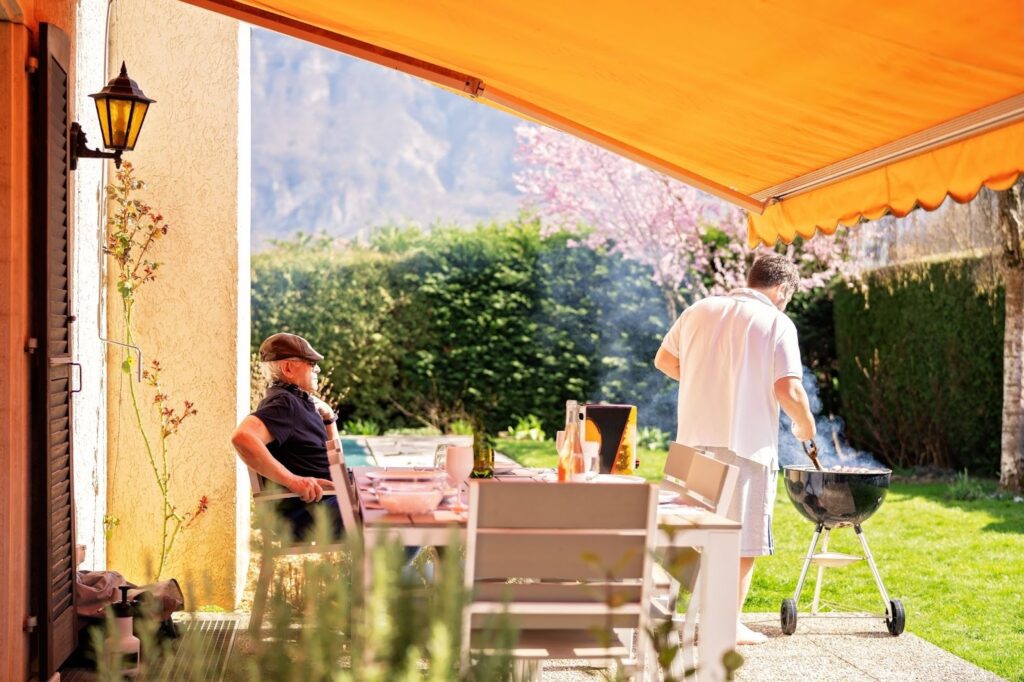
Retractable Fabric Awnings
Retractable fabric awnings extend outward from exterior walls to create shade. They work well for smaller patios or deck spaces. Homeowners retract them when storms approach to prevent damage. This protective function extends the fabric’s lifespan and preserves its structural components. UV-treated materials resist fading and mildew in humid climates. Professional installation improves alignment and operational safety.
Motorized Louvered Roof Systems
Motorized louvered roof systems use adjustable aluminum slats for precise control. Homeowners tilt the louvers to manage sunlight and ventilation. When rain begins, the slats close tightly to keep moisture out. This automated feature channels water into built-in drainage systems. Many manufacturers design these systems to meet strict wind ratings. Integration with smart home platforms increases convenience and responsiveness.
Modern Shade Sail Installations
Shade sails are made from durable fabric and are anchored at points for overhead coverage. Designers often use triangular or rectangular shapes to create visual interest. This contemporary style suits modern homes with clean architectural lines. Tensioned installation prevents sagging and pooling water. While shade sails reduce glare and heat, they do not provide full waterproof protection. Secure mounting posts or wall brackets maintain stability during wind events.
Screened and Enclosed Patio Covers
Screened and enclosed patio covers convert open patios into protected living areas. These systems block insects, debris, and strong winds. Homeowners often use them to extend outdoor enjoyment into cooler months. This enclosure type bridges the gap between patio and interior room.
Screen Rooms for Insect Protection
Screen rooms surround patios with mesh panels that allow airflow. These enclosures keep mosquitoes and flies outside during warm evenings. Aluminum framing supports the screens while maintaining structural strength. This lightweight design balances durability and ventilation. Homeowners often add ceiling fans to increase comfort in humid climates. Maintenance typically involves replacing worn mesh panels.
Glass Patio Enclosures and Sunrooms
Glass patio enclosures provide year-round protection from weather elements. These structures use insulated glass to regulate temperature and reduce noise. Sliding panels allow ventilation when conditions improve. This versatility creates a bright and functional space for dining or relaxation. Many real estate professionals note increased home value after sunroom additions. Licensed contractors usually handle permits and structural assessments for these projects.
Outdoor Living Rooms With Partial Walls
Outdoor living rooms combine roofing with partially solid walls. These walls block prevailing winds and enhance privacy. Homeowners often incorporate fireplaces, built-in seating, or mounted televisions. This integrated layout creates a comfortable entertainment zone. Durable flooring materials such as stamped concrete or porcelain tile withstand exposure to the weather. Strategic lighting extends usability into evening hours.
Eco-Friendly Patio Shade Solutions
Eco-friendly patio shade solutions integrate natural materials and energy-conscious design. These approaches reduce heat gain while minimizing environmental impact. Homeowners often combine landscaping with structural elements for layered coverage. This sustainable strategy supports long-term comfort and efficiency.
Bamboo and Reed Coverings
Bamboo and reed coverings provide lightweight, natural shade. These materials filter sunlight without trapping excess heat. Homeowners mount them over simple wood frames for affordable coverage. This cost-effective option suits tropical or coastal design themes. Sealing treatments extend durability in humid climates. Periodic replacement keeps the appearance fresh and structurally sound.
Green Roof Patio Extensions
Green roof patio extensions incorporate vegetation above structural supports. Living plants absorb heat and improve insulation performance. This natural layer reduces surface temperatures beneath the patio cover. Structural engineers must calculate load capacity before installation. Proper drainage systems prevent water accumulation and root damage. Homeowners who prioritize sustainability often favor this advanced solution.
Strategic Tree Canopy Planning
Strategic tree placement creates natural shade across patios and decks. Deciduous trees block intense summer sun while allowing winter light. This seasonal adaptation supports energy efficiency in adjacent rooms. Careful spacing prevents root interference with foundations or paving. Professional arborists can recommend species suited to local climates. Mature tree canopies eventually provide expansive, long-lasting coverage.
Upgrade Your Patio With Smart Shade Ideas
Upgrading your patio with the right covering enhances comfort, functionality, and long-term property value. Homeowners who align design, climate needs, and budget often see better results and fewer costly adjustments later. Consulting a professional patio cover installer helps you select materials, confirm structural requirements, and meet local building codes with confidence. Taking this informed step positions your patio as a lasting extension of your home rather than a temporary addition.
For more practical insights on outdoor improvements, visit the Saddleback Fence and Vinyl Products blog and explore solutions designed for real homes and real budgets.